Odd One Out
Four choices share a pattern. One quietly breaks it.
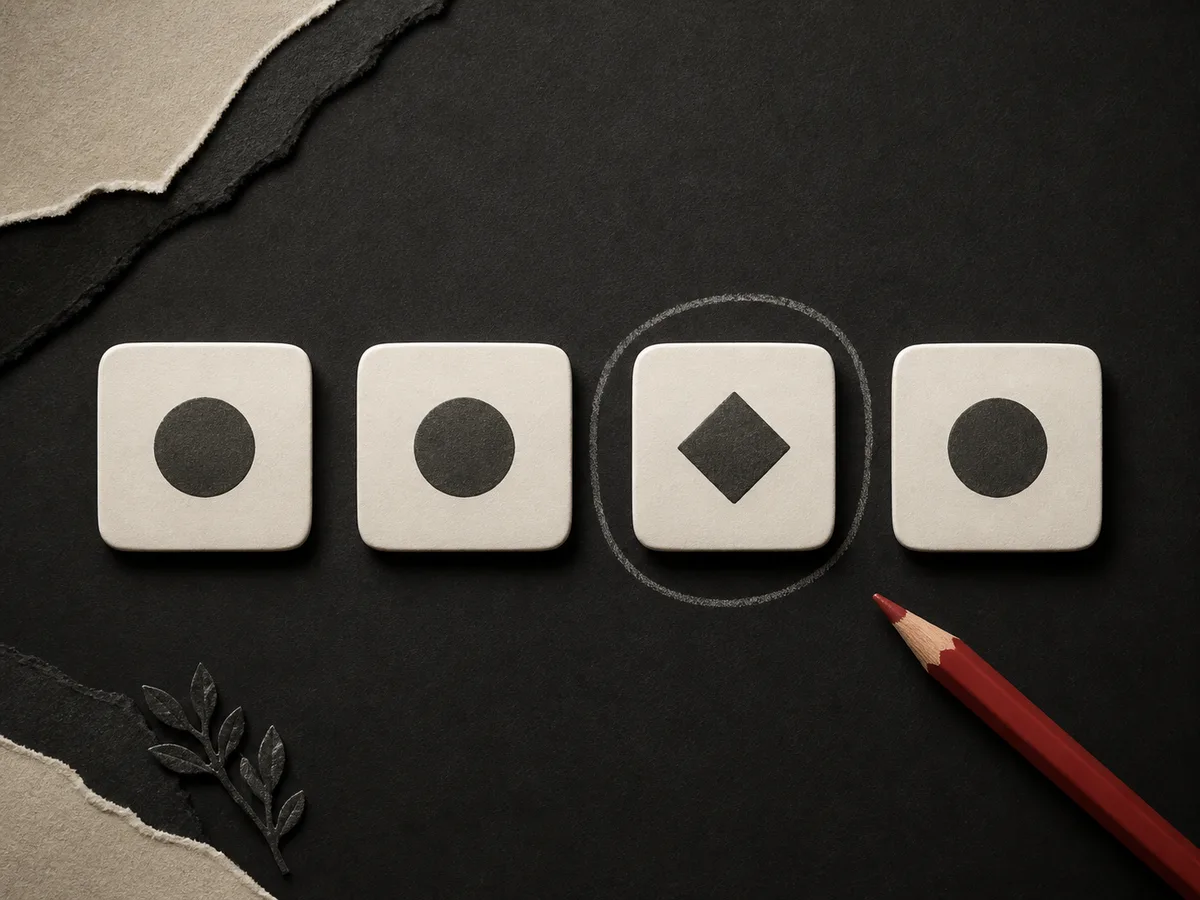
Odd One Out
Find the outlier across science, culture, geography, language, and everyday knowledge. Every reveal explains the rule.
- Rounds
- 10
- Timer
- None
- Answers
- Explained
Rules and scoring
Spot the outlier across science, culture, geography, language, and everyday knowledge, with a clear explanation after every ten-round choice.
Scan all four choices
Every Odd One Out round shows four items and asks which one breaks the shared pattern. The set may come from science, music, geography, language, art, food, or ordinary knowledge. Do not tap the first unusual-looking answer. Start by naming a rule that connects three choices, then test whether the fourth genuinely fails it. A strong rule should be objective and specific, such as three metals and one nonmetal, rather than a personal preference. There is no timer, so you can compare all four options and change your theory before committing to an answer.
Test the pattern
The best way to solve a round is to group the choices instead of staring only at the potential outlier. If three cities are in Africa and one is in Australia, geography supplies a clean rule. If three people are painters and one is a composer, profession supplies it. Every puzzle in the bank is written around one intended distinction and avoids sets where two options could reasonably be called different. The four answer positions shuffle each time, so the logic stays central. Select one option when you can explain why the other three belong together.
Check the rule
Once you choose, the answer is revealed alongside a direct explanation of the category shared by the other three items. Correct choices earn ten points. A wrong choice still shows the intended rule immediately, so the round teaches a small fact instead of leaving the result unexplained. The interface marks the correct option and your selected option separately, making close calls readable at a glance. Ten rounds produce a score out of 100 with no speed bonus, streak multiplier, or mystery points. That simple scoring makes it easy to compare two runs or pass the device to someone else.
Expect the category to move
A full game deliberately changes subjects between rounds. One question may depend on planets, the next on instruments, and the next on plants or calendar months. This makes Odd One Out broader than a single-topic quiz while keeping every interaction familiar. The prompt bank is larger than one game, and both questions and answer positions are shuffled for replay value. It works alone, as a quick family challenge, or on a shared screen where players argue for a rule before revealing it. No account, download, or room setup is required, and every completed run ends with a clear correct-answer count.
How do you play Odd One Out online?
Study four choices, find the objective rule shared by three, and select the one that does not fit. The intended pattern is explained immediately.
What subjects appear in Odd One Out?
Rounds mix science, geography, arts, music, language, food, calendars, animals, and other general-knowledge categories.
Does the game explain why an answer is different?
Yes. Every reveal states the shared category and the exact distinction that makes the correct option the outlier.